As network environments become more complex, many x86 Mini PCs are no longer designed only for office or home use. More platforms are now targeting:
- pfSense
- OPNsense
- Multi-WAN routing
- Industrial networking
- VPN gateways
- Network security
- Edge computing
Qotom Q30900GP is one of the more unique platforms in this category.
The first thing that stands out is the LAN configuration. The system integrates a total of 16 Ethernet ports, including:
- 8 × Intel I225-V / I226-V 2.5G LAN
- 8 × Realtek RTL8153B Gigabit LAN
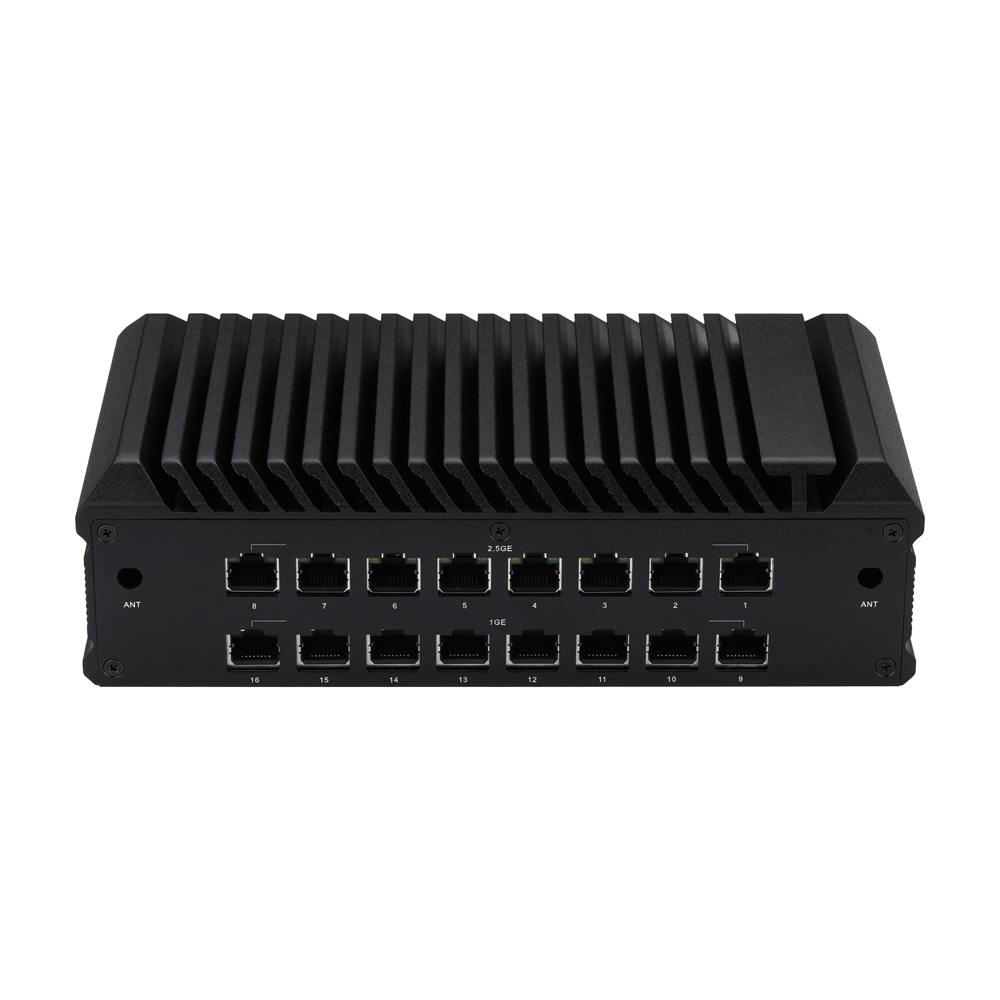
Compared with traditional 4-port or 6-port firewall Mini PCs, this design is clearly built for more complex networking environments.
On the front I/O side, the system provides:
- 2 × USB 3.0
- 2 × USB 2.0
- 1 × HDMI
- 1 × DisplayPort
- 1 × RS-232 console port (RJ45)
- Power / Reset buttons
- Power and HDD LEDs
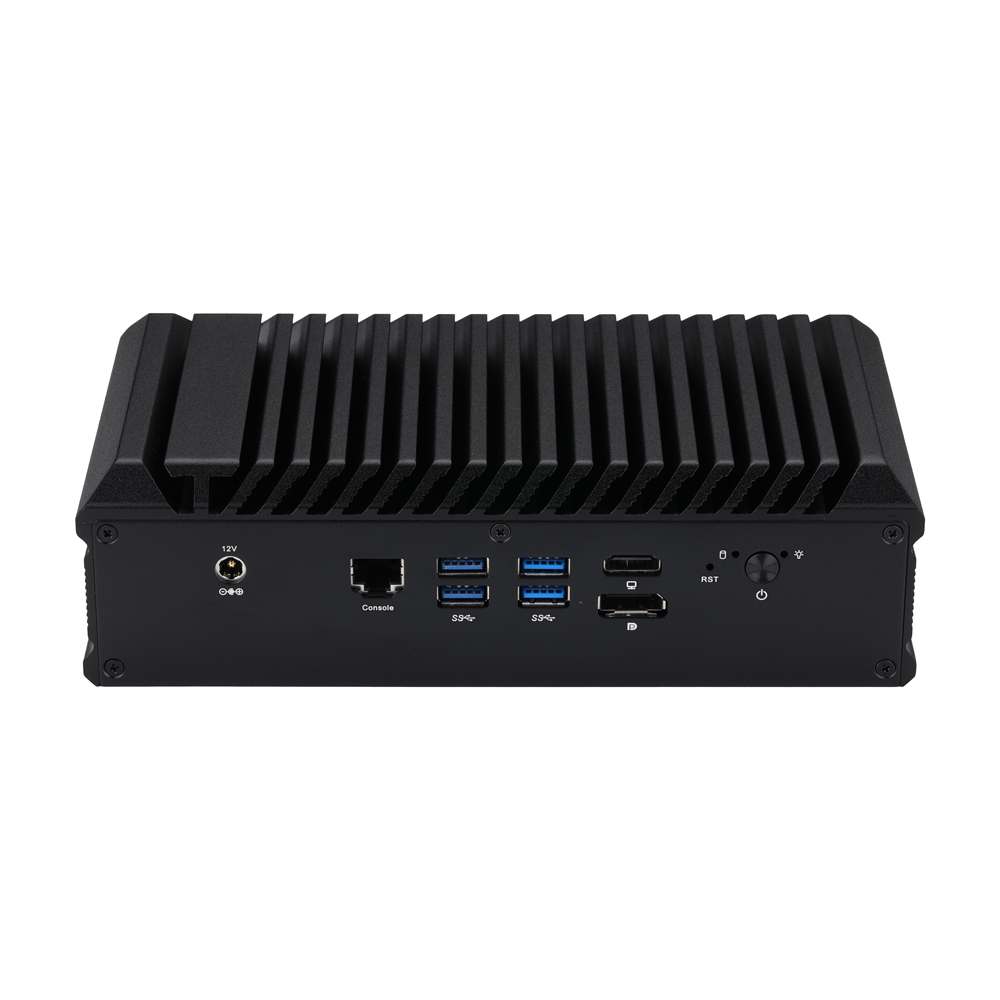
The HDMI and DisplayPort outputs are useful for local system installation and debugging, especially when deploying Windows, Linux, pfSense, OPNsense or OpenWRT x86 environments.
The RS-232 console interface also makes the platform more suitable for industrial communication and serial device management scenarios.
Inside the system, Q30900GP supports multiple Intel low-power U-series processors, including:
- Intel 8th Gen Whiskey Lake-U
- Intel 8th Gen Coffee Lake-U
- Intel 10th Gen Comet Lake-U
Available CPU options range from Celeron models to Core i7 processors, depending on deployment requirements.
For memory, the platform uses:
- 1 × DDR4 SO-DIMM slot
- Up to 32GB DDR4 memory
- 2133 / 2400MHz support
Storage support includes:
- 1 × 2.5-inch HDD / SSD
- 1 × Mini PCIe for mSATA SSD
The motherboard also includes:
- Mini PCIe expansion slots
- SIM card slot
- Wi-Fi / 4G expansion capability
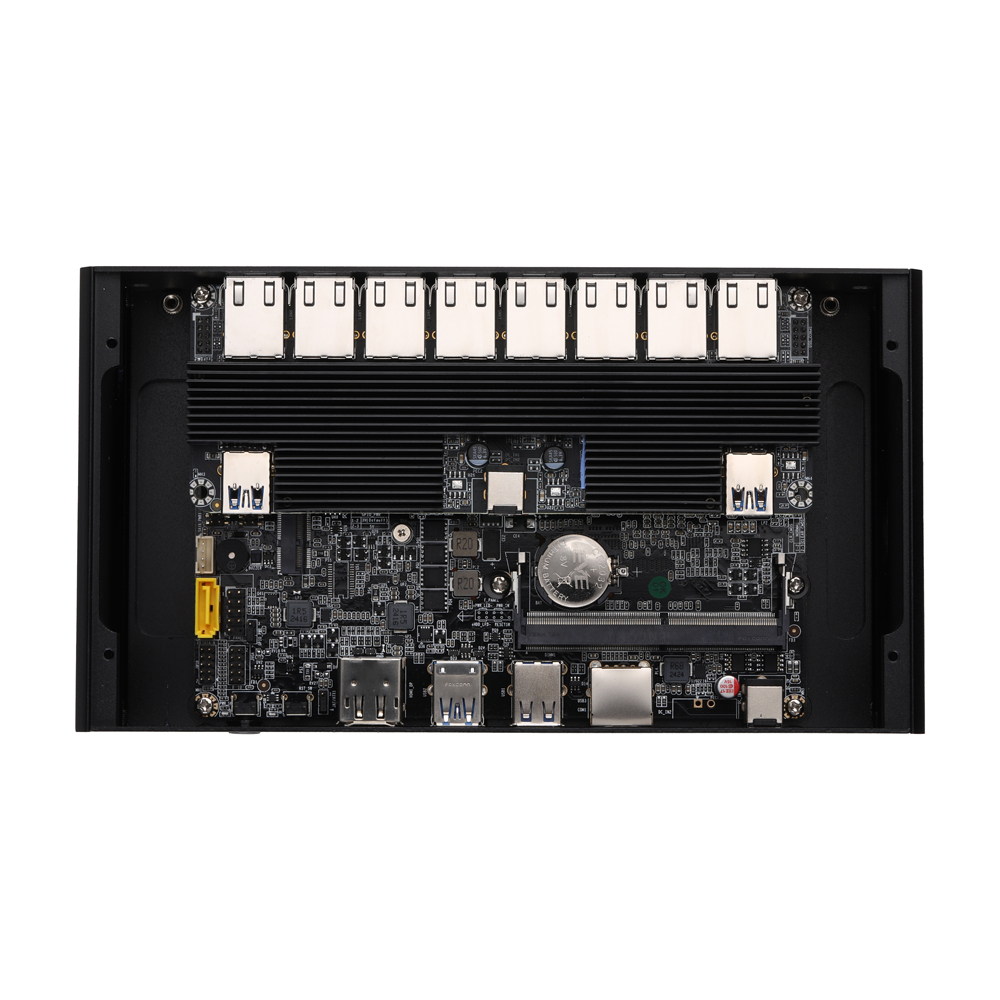
This makes the platform more flexible for edge networking and remote deployment environments.
From a hardware design perspective, Q30900GP already feels closer to a lightweight network appliance than a traditional Mini PC.
The 16-port network architecture becomes especially useful in scenarios where multiple isolated network segments are required.
For example:
- PLC networks
- SCADA systems
- MES systems
- Industrial cameras
- IoT devices
- NAS storage
- Office networks
- VPN traffic
In many industrial environments, putting everything into a single flat network can quickly make troubleshooting and maintenance difficult.
Although VLANs can solve part of the problem, physical network isolation is still preferred in many projects because it is easier to manage and easier to troubleshoot later.
With multiple physical interfaces, each network segment can be separated more clearly.
The 8 Intel 2.5G ports are especially useful for:
- pfSense
- OPNsense
- Multi-WAN routing
- VPN gateways
- Firewall applications
- NAS communication
- High-bandwidth network traffic
Intel I225/I226 NICs also tend to have better compatibility under BSD and Linux-based networking systems.
The platform uses a fanless aluminum chassis, which is more suitable for:
- 24/7 operation
- Industrial cabinets
- Weak current boxes
- Edge deployment
- Dust-sensitive environments
Compared with actively cooled systems, fanless designs reduce dust accumulation and long-term mechanical failure risks.
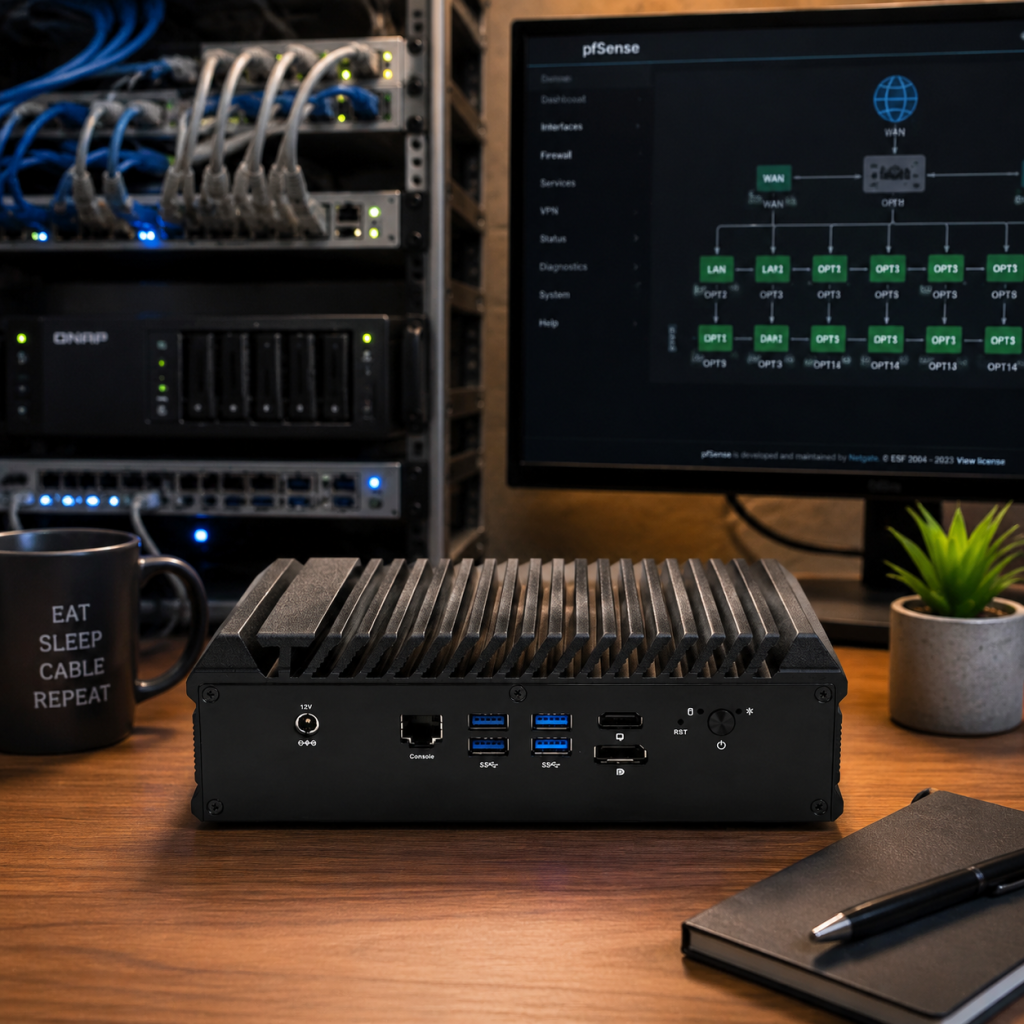
Potential application scenarios include:
- pfSense firewall appliance
- OPNsense router
- OpenWRT x86
- Industrial network isolation
- Multi-WAN gateway
- SD-WAN edge node
- VPN server
- Industrial edge gateway
- Network security appliance
- HomeLab networking environment
At the moment, Mini PCs with 16 Ethernet ports are still relatively uncommon in the market.
Q30900GP is an interesting example of how x86 Mini PCs are gradually evolving into compact network infrastructure platforms rather than traditional desktop systems.